Hidden Natural Wonders in the Appalachian Mountains
The Appalachian Mountains do not rely on drama. Their interest comes from age, complexity, and quiet shifts in landscape that reward attention. Subtle changes in elevation can transform forests. Old geology shows up in unexpected ways. Water, wind, and stone continue to do the work they started millions of years ago.
Many of the range’s most compelling natural features sit outside famous overlooks and crowded trails. They are not secret, but they require intention. These places stand out because of what they reveal about the mountains themselves. Ancient terrain, unusual ecosystems, and rare landforms tell a deeper story than surface beauty alone.
These locations highlight that depth. Each offers something uncommon within the Appalachian system.
Grayson Highlands Balds, Virginia

Grayson Highlands rises above tree line in a way that surprises first-time hikers. Open grasslands cover the highest ridges, creating wide sightlines across southwestern Virginia and into North Carolina.
Wild ponies roam freely across the balds, a managed herd descended from livestock introduced decades ago. Their grazing helps maintain the open landscape by limiting tree growth.
At more than 5,000 feet in elevation, Grayson Highlands ranks among the highest points in Virginia. The area also contains some of the state’s oldest exposed rock, with formations dating back over a billion years. Wind and weather move quickly across the ridges, giving the landscape a constant sense of motion.
Lost Cove and Harper Creek Wilderness, North Carolina

Harper Creek cuts a steep path through rugged terrain, forming a corridor of waterfalls, plunge pools, and moss-covered stone. Trails descend sharply, following the sound of moving water deeper into the valley.
South Harper Creek Falls spans a wide rock face, spreading water across layered stone. North Harper Creek Falls drops in stages farther upstream, with fewer signs of human presence. The surrounding forest grows thick and close, limiting long views and drawing focus to sound and texture.
Lost Cove sits above the creek and reflects a different chapter. Stone walls and clearings mark former settlements abandoned in the early 20th century. The wilderness area covers more than 14,000 acres and remains one of the least developed sections of the Pisgah National Forest.
Roan Mountain Rhododendron Gardens, Tennessee and North Carolina

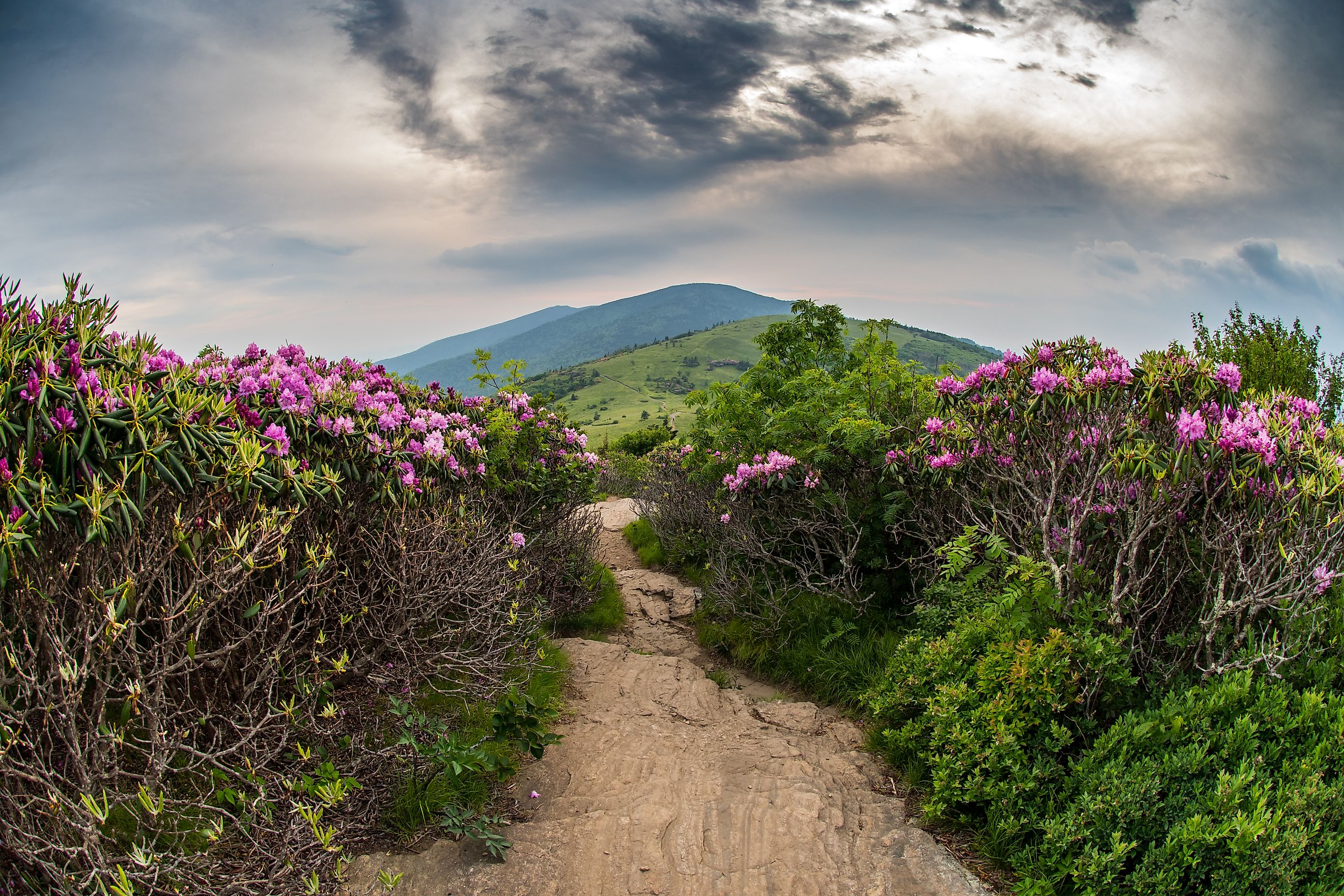
Roan Mountain supports the largest natural rhododendron garden in the world. The bloom typically peaks in late June, covering hillsides with dense clusters of white and pale pink flowers.
Elevations reach above 6,000 feet, creating cooler conditions that support plant species more common farther north. The gardens sit within a broader highland area that includes grassy slopes and spruce-fir forest.
Wooden walkways protect sensitive ground beneath the shrubs. Outside bloom season, the site still draws attention for its long views and shifting cloud cover. Roan Mountain also hosts one of the longest running mountain festivals in the country, centered on the annual rhododendron bloom.
Hidden Arches of Red River Gorge, Kentucky

Red River Gorge contains more than 100 documented sandstone arches, one of the highest concentrations east of the Mississippi River. Many remain far from main routes.
Swift Camp Creek Arch rises near flowing water, blending into the surrounding forest until viewed from below. Hidden Arch requires a steady climb and careful navigation, rewarding effort with a wide span of exposed stone.
The arches formed through differential erosion as softer sandstone wore away beneath harder layers. Some spans exceed 100 feet in width. The gorge’s sandstone cliffs also support one of the most diverse climbing environments in the eastern United States, though the arches exist apart from that scene.
Linville Gorge Wilderness, North Carolina

Linville Gorge cuts sharply through the Blue Ridge, dropping nearly 2,000 feet from rim to river in places. The terrain changes fast, with narrow trails, steep descents, and exposed rock.
Linville Falls marks a dramatic turn where the river shifts direction and energy. Below the falls, the gorge deepens and narrows, creating a sense of enclosure rare in the region.
The wilderness area spans more than 12,000 acres and limits development by design. No bridges cross the gorge interior. Vegetation changes noticeably between shaded slopes and sun-exposed cliffs, supporting a wide range of plant life within a compact area.
Canaan Valley Wetlands, West Virginia

Canaan Valley sits at over 3,200 feet in elevation, making it one of the highest large valleys east of the Mississippi River. Its elevation and drainage patterns support extensive wetlands uncommon in the central Appalachians.
Bogs, meadows, and slow-moving streams dominate the landscape. Cranberries grow naturally in acidic soil. Boardwalks allow access without damaging sensitive ground.
The valley supports more than 580 plant species and serves as a key stop for migratory birds. Winter brings heavy snowfall, reinforcing the valley’s northern character and supporting cold-adapted ecosystems uncommon in surrounding areas.
White Rocks at Cumberland Gap, Kentucky

White Rocks rises abruptly above the forest near Cumberland Gap, exposing pale sandstone cliffs that contrast sharply with darker vegetation below.
A steep trail leads to open rock faces with views across Kentucky, Virginia, and Tennessee. Wind exposure shapes the sparse plant life clinging to narrow cracks in the stone.
The formation consists of Pennsylvanian-age sandstone, deposited more than 300 million years ago. The site sits within Cumberland Gap National Historical Park but receives far less attention than nearby overlooks.
Places the Maps Don’t Emphasize
Hidden natural wonders offer a clearer view of what the Appalachian Mountains truly are. They show variation, not repetition. Grasslands exist above forests. Wetlands thrive at elevation. Stone arches rise where cliffs give way.
These sites reward curiosity and patience. They show how geology, climate, and time intersect across short distances. None rely on spectacle alone. Their interest comes from contrast, history, and physical presence.
Taken together, they explain why the Appalachians continue to hold attention. The range reveals its depth slowly, and the most compelling places tend to appear when expectations fall away.