The Largest State Parks in the United States
State parks do not always get the same attention as national parks, but some cover far more ground. In several states, the largest protected landscapes were never designated as federal land. They are managed at the state level and span hundreds of thousands of acres, covering deserts, mountain ranges, forests, coastlines, and long stretches of backcountry. In terms of size alone, a few state parks are larger than well known national parks.
Large acreage changes how these places function. Bigger boundaries allow wildlife to move freely, protect entire watersheds, and keep development at a distance. These seven state parks rank among the largest in the United States by total land area and reflect how different states chose to protect their most expansive natural areas.
Adirondack Park, New York

- 6 million acres
- Established: 1892
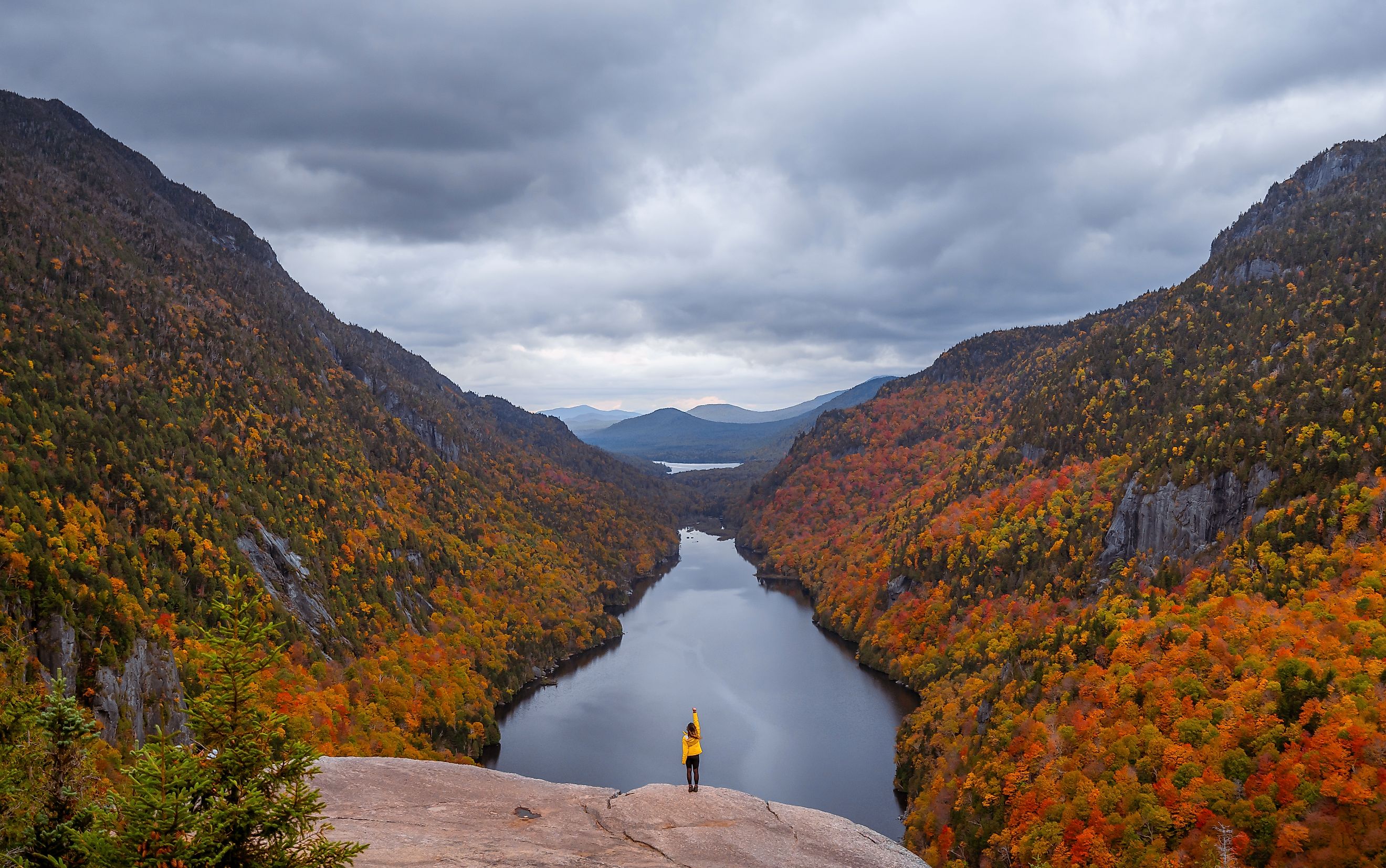
Adirondack Park is the largest publicly protected area in the contiguous United States, and it operates unlike any other park on this list. Instead of being fully state owned, the park blends public land and private communities inside a single protected boundary. Roughly half the land is state owned forest preserve, and the rest includes small towns, lakeside camps, and working forests.
The park covers more land than Yellowstone, Yosemite, Grand Canyon, and Glacier National Parks combined. Inside its borders sit more than 3,000 lakes, 30,000 miles of rivers and streams, and the High Peaks region, home to New York’s tallest mountains. The Forest Preserve clause in the state constitution permanently protects public lands here as wild forest.
Adirondack Park set an early model for conservation in the United States. Its creation helped shape national thinking about land preservation decades before the modern environmental movement took hold.
Wood-Tikchik State Park, Alaska

- 1.6 million acres
- Established: 1978
Wood-Tikchik is the largest state park in the United States by a wide margin, and its scale feels almost unreal. Located in southwest Alaska, the park protects a network of lakes, rivers, wetlands, and tundra between the Nushagak and Mulchatna river systems.
The park contains seven major lakes connected by rivers that drain into Bristol Bay. There are no roads inside the park, so access is only available by floatplane, boat, or long backcountry routes. Wildlife thrives here, including brown bears, moose, caribou, wolves, and millions of migratory birds.
Wood-Tikchik was established to protect the region’s fisheries and subsistence lifestyle. Many nearby communities depend on the same waterways preserved inside the park. The land is largely unchanged by development. It is one of the most intact ecosystems protected at the state level anywhere in the country.
Big Bend Ranch State Park, Texas

- 310,000 acres
- Established: 1988
Big Bend Ranch State Park sprawls across more than 310,000 acres of West Texas desert, canyons, and river valleys. The land started as working ranches in the 1800s, with sheep herders like Andrés Madrid and families like the Carrascos. In the early 1900s, the Bogel brothers began buying up smaller ranches, and the Fowlkes family continued consolidating the property during the Depression.
The state finally bought the ranch in 1988, and it opened as a natural area in 1991. It became a full state park in 1995 and welcomed the public completely in 2007. Today it offers wide-open space for hiking, horseback riding, and mountain biking, with rugged desert landscapes and river valleys that feel untouched by time.
Anza-Borrego Desert State Park, California

- 650,000 acres
- Established: 1933
Anza-Borrego Desert State Park is the largest state park in California. More than 500 miles of dirt roads, dozens of miles of hiking trails, and 12 designated wilderness areas cut through the park. This opens access to remote corners of the California Desert that feel far from the coast.
The park is named for Spanish explorer Juan Bautista de Anza and the word borrego, meaning bighorn sheep. The landscape shifts between dry washes, palm groves, cactus fields, and wide desert views. Spring rains can bring short-lived wildflower blooms, while dry seasons highlight the park’s stark geology.
Wildlife is part of everyday life. Roadrunners, golden eagles, kit foxes, mule deer, and bighorn sheep move through the park alongside reptiles like iguanas, chuckwallas, and the red diamond rattlesnake.
Chugach State Park, Alaska

- 495,000 acres
- Established: 1970
Chugach State Park stands out because it sits right next to a major city. Nearly 500,000 acres stretch across mountains, glaciers, lakes, and coastline along Turnagain and Knik Arms. Peaks climb above 8,000 feet, valleys hold glacial streams, and wildlife like moose, bears, Dall sheep, and mountain goats roam freely. The western edge meets Anchorage, and the park extends east toward Palmer, Eagle River, and Girdwood.
The park protects Anchorage’s water supply and preserves huge sections of Alaskan wilderness amid city growth. Over 280 miles of trails, campgrounds, public-use cabins, and lakes offer hiking, fishing, boating, horseback riding, and winter sports.
Baxter State Park, Maine

- 209,644 acres
- Established: 1931
Baxter State Park is smaller than others on the list, but its influence and presence are outsized. It was donated to the state by former governor Percival Baxter, and created with strict preservation rules that limit development and commercial activity.
The park circles Mount Katahdin, Maine’s tallest peak and the northern end of the Appalachian Trail. Its landscape is a mix of jagged mountain ridges, glacial valleys, and clear, cold lakes fed by mountain streams. Dense forests of spruce and fir climb the slopes, and boggy wetlands thread through lower elevations. Trails climb steep summits, wind along ridgelines, and cross fast-moving rivers. Roads are rare, campsites are few, and much of the park is untouched, preserving the rugged character that draws hikers, anglers, and backcountry explorers.
Niagara Falls State Park, New York

- 400 acres
- Established: 1885
Niagara Falls State Park may seem out of place on a list focused on size, but its inclusion highlights how state park significance is not only about acreage. It is the oldest state park in the United States and protects one of the most powerful natural landmarks in North America.
The park preserves the American Falls, Bridal Veil Falls, and access points along the Niagara River gorge. Its establishment marked an early victory for public access and conservation at a time when private interests threatened to control the falls entirely.
Niagara Falls State Park helped set the precedent for future park systems across the country. Its legacy paved the way for larger land protections that followed in the decades ahead.
Where America Goes Big and Stays Wild

Large state parks protect entire systems rather than isolated landmarks. Rivers can flow naturally, wildlife can migrate, and ecosystems can adapt over time. These parks also give states the flexibility to manage land for recreation, conservation, and cultural preservation without constant pressure to commercialize.
Each park on this list reflects a different regional priority. Some protect desert solitude. Others safeguard mountain watersheds or remote fisheries. Their size gives them resilience, and that resilience becomes more important as development pressures increase nationwide.
State parks may not always dominate headlines, but the largest among them quietly preserve some of the most important landscapes in the United States.
| State Park | State | Size (Acres) | Year Established | Notable Features |
|---|---|---|---|---|
| Adirondack Park | New York | 6 million | 1892 | Public and private land mix, High Peaks, thousands of lakes |
| Wood-Tikchik State Park | Alaska | 1.6 million | 1978 | Roadless lake system, major wildlife habitat, Bristol Bay waters |
| Big Bend Ranch State Park | Texas | 310,000 | 1988 | Rugged desert, horseback riding, mountain biking |
| Anza-Borrego Desert State Park | California | 650,000 | 1933 | Badlands, slot canyons, wildflower blooms |
| Chugach State Park | Alaska | 495,000 | 1970 | Glaciers, alpine terrain, urban adjacency |
| Baxter State Park | Maine | 209,644 | 1931 | Mount Katahdin, strict preservation rules |
| Niagara Falls State Park | New York | 400 | 1885 | Oldest state park, Niagara Falls and river gorge |